Experiencing Schwingen: how to visit a real Swiss wrestling festival
The national sport of Switzerland is not skiing but Schwingen. The wrestling takes place in sawdust under the open sky. The powerful athletes wear canvas breeches over their clothes and grip each other by them, while brass music plays between the bouts. The prize for the winner is often a live bull. There is no professional league, no transfer fees and no stadium roof; Schwingen has kept its original character. Canton Schwyz is one of its heartlands. For guests, especially from Germany and Austria, a wrestling festival in summer is a good opportunity to experience Swiss custom as it is actually practised. Here you can read what to watch for and how to get to a festival.
The rules in brief
Two wrestlers face each other in a round sawdust ring. Each takes hold of the other's Schwingerhosen, the reinforced canvas breeches worn over the clothes. The aim is to throw the opponent onto his back. A bout is won when both shoulders (or the decisive part of the back) touch the sawdust while the winner still keeps his grip on the breeches. The bouts are short and powerful, yet technically more demanding than one might at first think. There are dozens of throws with their own names, such as the Kurz, the Brienzer or the Wyberhaken, passed on over generations. Judges score every bout. Over the whole festival the wrestlers collect points until the final bout decides the winner of the day.
Two rituals show how much respect matters in this sport. Before every bout the opponents shake hands. After the bout the winner brushes the sawdust from the loser's back. Both belong firmly to Schwingen and are not merely put on for show.
Why the winner takes home a bull
Schwingen is to this day an amateur sport. Even the Schwingerkönig, crowned every three years at the federal festival before more than 50 000 spectators, receives no prize money in the ring. Instead there are prizes in kind from the Gabentempel, donated by local patrons: a Muni (young bull), cowbells, furniture or alpine cheese. The best wrestlers are known throughout the country and still go to an ordinary job. The bull usually ends up on the winner's farm; sometimes it goes back to the breeder in exchange for cash. Almost everyone in Switzerland knows the picture of the king with his horned prize all the same.
How a wrestling festival unfolds
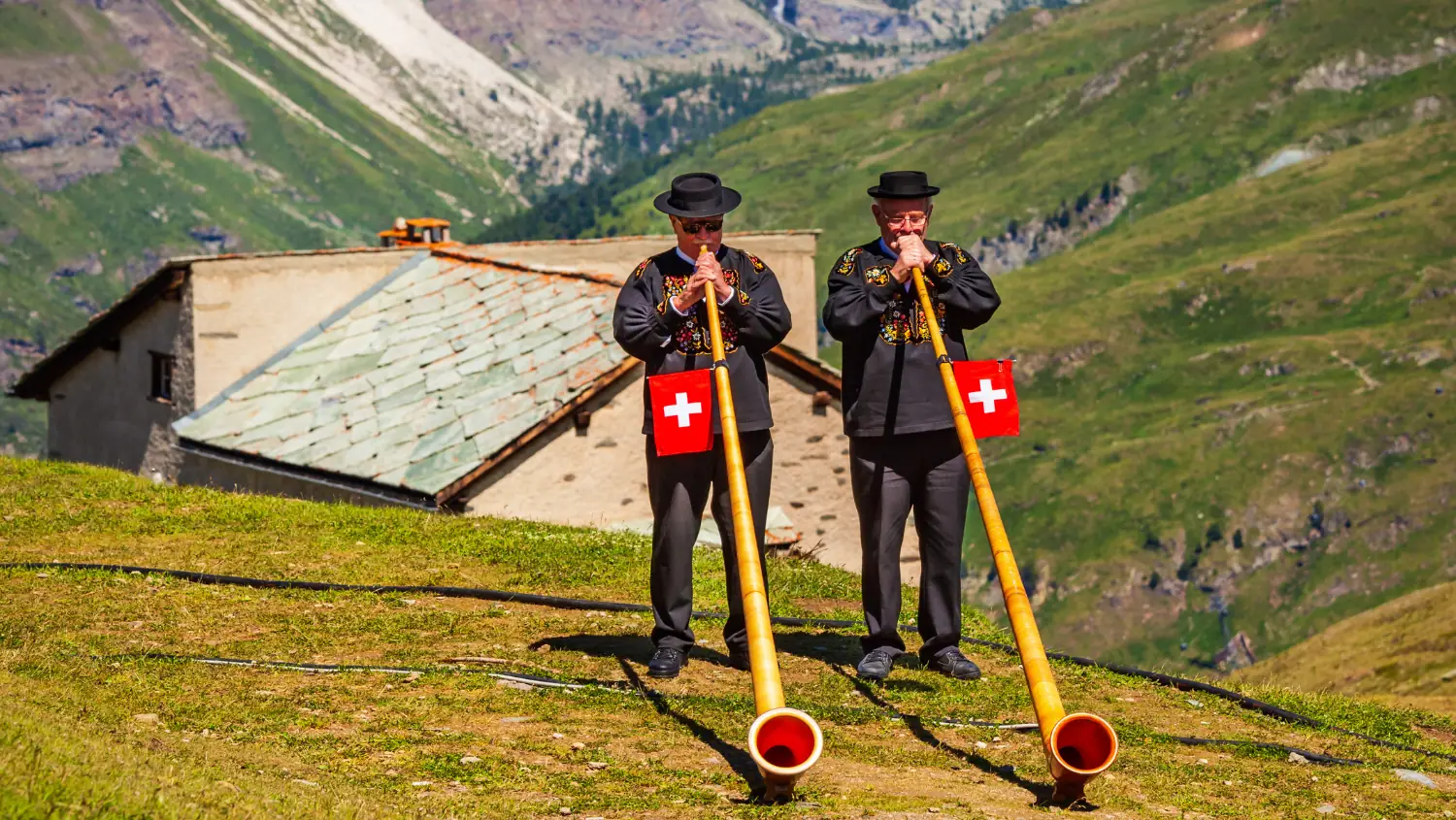
Come early on a summer Sunday to a festival somewhere in the hills. Sawdust rings are laid out on a meadow and there is coffee and cake in the festival tents. Between bouts the alphorn and the yodel sound, and families sit with their picnic blankets around the arena. In the morning the bouts run simultaneously in several rings. There is a smell of sausages and fresh sawdust. Between rounds the wrestlers sit among the crowd, because a sport whose kings drive tractors needs no separate area for honoured guests. In the late afternoon, at the Schlussgang, all attention turns to a single ring. The day ends with the winner lifted onto shoulders and the bull garlanded, while singing goes on in the festival tent.
Nothing here is staged for tourists. As a guest you are therefore simply part of the crowd, like everyone else.
How to get to a festival
- When: the season runs roughly from May to September and peaks in high summer. Almost every weekend there is a festival somewhere in Central Switzerland, from the village Schwinget on a mountain pasture to the cantonal festival with thousands of spectators.
- Where: in canton Schwyz festivals are held each season in the valleys and on the alps. The most atmospheric for guests are the mountain festivals on passes and alps. The current calendar is available from the cantonal wrestling association or in the regional listings. We also publish upcoming dates in our event notices.
- Tickets: village and alpine festivals often cost little or nothing beyond the festival badge. Large cantonal festivals and the federal one, by contrast, are sold out long in advance.
- As a guest: wear clothes suited to a mountain meadow. For the festival tents you need cash. Applause goes to a good throw, whichever wrestler produces it. The rituals are not made fun of, because brushing off the sawdust is taken seriously.
- Getting there: many alpine festivals lie an hour's walk or a short cable car ride above the valley, so the way there is part of the outing. Extra buses often run to the big festivals.
Schwingen in canton Schwyz
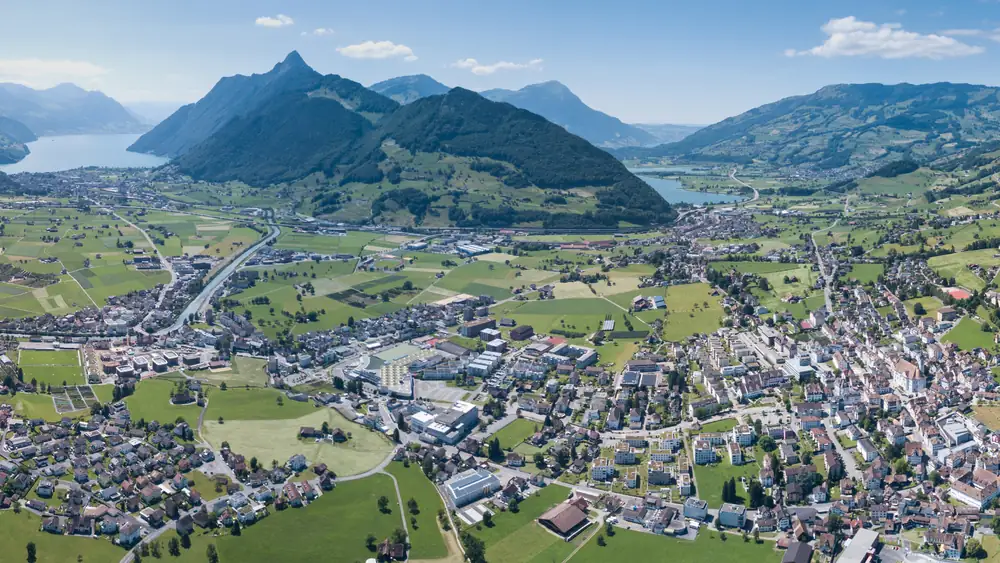
Schwingen has its roots in landscapes like this one. Herdsmen once measured their strength on the high pastures, and the festival meadows lie between the Mythen and the Muotatal. In some Schwyz families people have stood in the sawdust for generations. Our magazine article tells that story in more detail: Sawdust and tradition. Anyone planning a summer visit around a festival weekend will find ideas for the journey in the article Central Switzerland itinerary.
Frequently asked questions
What is Schwingen? Schwingen is traditional Swiss wrestling. The opponents take hold of each other's canvas breeches and try to throw one another onto the back in the sawdust ring.
Why does the winner get a bull? Schwingen is strictly an amateur sport. The winners therefore receive prizes in kind rather than money, traditionally a young bull, cowbells or cheese. That helps the sport keep its popular character.
Can guests attend a wrestling festival? Yes, the festivals are public and guests are welcome. As nothing is staged for an audience, you see the festival as it is. The small mountain festivals are especially good for a first visit.
When is the Schwingen season? The season runs roughly from May to September, with festivals on most summer weekends. The federal festival, at which a Schwingerkönig is crowned, takes place every three years.
Do I need to understand Swiss German? No. After about three bouts the sport explains itself. And to order a sausage, pointing at it is enough.