Central Switzerland itinerary: three days around Lake Lucerne
Around Lake Lucerne much of what Switzerland is known for lies close together: the fjord-like Urnersee, famous mountains such as the Rigi, the Rütli as the birthplace of the Confederation and, on the Stoos, the steepest funicular in the world. All these destinations can be reached from one another within an hour. This three-day plan links the most important of them from a single base. In doing so it follows the routes locals take rather than those of the tour coaches. You do not need a car. Almost all the journeys are included with a GA travelcard or Swiss Travel Pass; what exactly applies is in the article Swiss Travel Pass, GA and half-fare card in the Schwyz region. You can swap the days around according to the weather. For the first two days a bad-weather alternative is given as well.
Where to stay
We recommend Brunnen. Main-line trains and all scheduled boats stop here, the Stoos lies directly above and Schwyz is right next door. Prices are also usually lower than in Lucerne. More about the village in the article Brunnen on Lake Lucerne. Lucerne suits anyone who prefers to spend the evenings in town. Schwyz is the quietest choice and the least geared to tourists; more on it in the article Things to see in Schwyz. The plan works equally well from all three.
Day 1: the Rigi and the lake
The first day brings the classic of the region, as a round trip by boat and train:
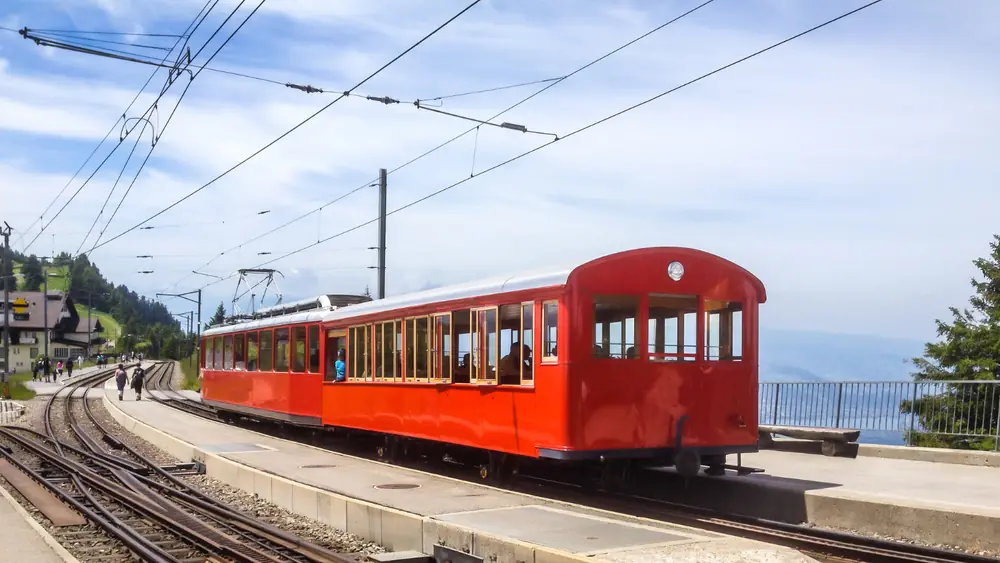
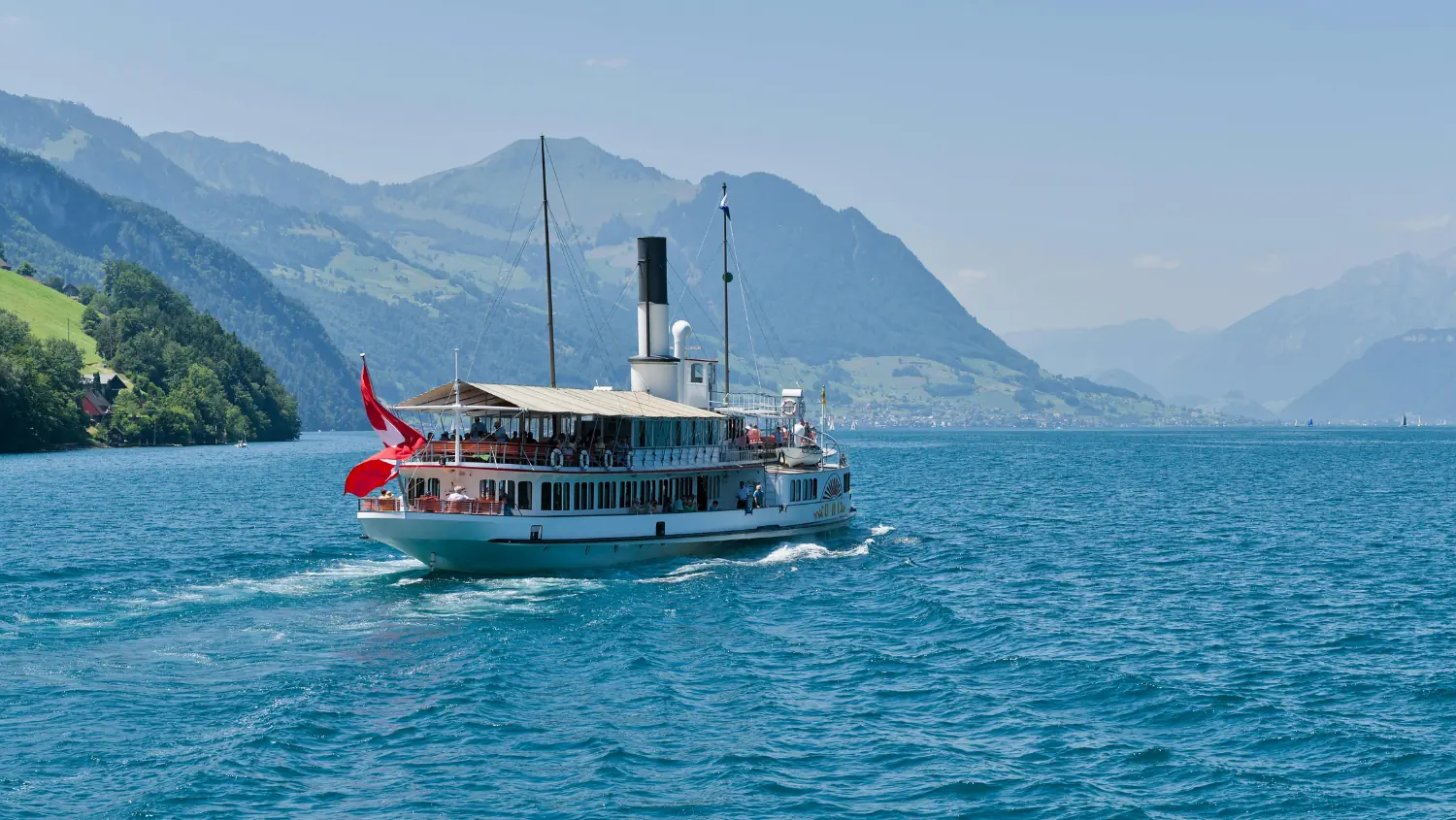
- Morning: by boat from Brunnen or Lucerne across the lake to Vitznau. If you board early you will still get a seat at the bow. In Vitznau the rack railway takes you up to Rigi Kulm; it has run since 1871 and was the first mountain railway in Europe. At the top you walk a round of the summit, from which you can see thirteen lakes.
- Midday: on foot down the broad panorama path to Rigi Kaltbad. It takes 45–60 minutes and you have the lake in view the whole time. Further Rigi walks are in the article Hikes on the Rigi. Lunch is on one of the terraces in Kaltbad.
- Afternoon: now you have a choice. You can walk for two hours on the level panorama path Kaltbad–Scheidegg, where the view is wide and usually few people are about. Or you can spend two hours in the mineral bath by Mario Botta, high above the lake. More about the bath in the article Mineralbad & Spa Rigi Kaltbad.
- The way back: the cable car takes you down to Weggis, and from there the boat brings you back in the evening light.
In bad weather: visit the old town of Lucerne and the Forum of Swiss History in Schwyz instead. More about the museum in the article Federal Charter Museum and Forum of Swiss History.
Day 2: the Stoos and Swiss history
- Morning: bus 501 takes you from Schwyz station to the valley station of the Stoos funicular. From Brunnen you can also reach the Stoos via Morschach by cable car. The steepest funicular in the world carries you at a gradient of up to 110 % into the car-free village; more on it in the article Stoosbahn: Riding the World's Steepest Funicular. From there the chairlift takes you up the Klingenstock.
- Midday: from the Klingenstock you walk for about 2 hours along the ridge to the Fronalpstock. Lake Lucerne lies some 1500 m below you and on the horizon you see ten lakes. Everything important about the tour is in the article Stoos Ridge Hike. A late lunch awaits on the terrace at the Fronalpstock.
- Afternoon: afterwards you ride down to Brunnen and take the boat to the Rütli meadow. The crossing takes only 10 minutes. On the meadow, according to tradition, the oath of 1291 was sworn from which the Confederation dates. Flag, meadow and the view over the Urnersee are quickly taken in, so you are back for dinner. More on this in the article The Rütli meadow.
- Evening: stroll along the promenade in Brunnen. Anyone still in the mood can assemble their own knife at Victorinox; the appointment should be booked in advance. More on this in the article Victorinox in Brunnen.
In bad weather: visit the Hölloch. Underground it is dry in any weather and a cool 6 °C. More on this in the article Hölloch: inside one of Europe's largest cave systems.
A note on the season: for the whole ridge walk the lifts must be running on the summer timetable. When that is the case is explained in the article Season and lift times for the Stoos ridge hike. Outside that period you simply ride to the viewpoint on the Fronalpstock instead.
Day 3: three variants to choose from
Variant A: Einsiedeln with its abbey and baroque church. The train takes you over the hills to Einsiedeln and the great Benedictine abbey. The Black Madonna stands in the abbey church. In the afternoon you can see the abbey library with its 230 000 volumes on a guided tour. In the late afternoon the monks sing the Salve Regina, which you can listen to without paying. Half a day is enough for the abbey; a walk along the shore path by the Sihlsee goes well with it. More on this: Visiting Einsiedeln Abbey and A day trip from Zurich to Einsiedeln.
Variant B: the Muotatal. Bus 501 takes you in twenty minutes into the remote Muotatal. There you visit the Hölloch, the longest cave in Switzerland, on a guided tour; the tour must be booked in advance. Lunch is by the green Muota. In the afternoon you have two options. The Glattalp cable car takes you up to the coldest high plateau in Switzerland, which shows its friendly side in summer. Alternatively you walk into the Bödmeren primeval forest. More on this: Hölloch: inside one of Europe's largest cave systems, The Muotatal and Glattalp: the coldest place in Switzerland and how to visit it.
Variant C: on the trail of William Tell. The boat takes you down the Urnersee along the Axen cliffs. At Küssnacht you walk through the Hohle Gasse, where according to legend Tell shot Gessler; more on it in the article The Hohle Gasse. At the Charters of Confederation Museum in Schwyz you then see the documents themselves. In this way you link the Tell legend with the historical record in a single day. More about the museum in the article Federal Charter Museum and Forum of Swiss History.
Practical notes
- Tickets: with a GA travelcard or Swiss Travel Pass you travel here on all trains, buses and boats, on the whole Rigi and on the Stoos funicular. You only pay for the chairlifts on the Stoos, the cave tours and admission to the bath. Details are in the article Swiss Travel Pass, GA and half-fare card in the Schwyz region.
- Reservations: only the Hölloch tours and the knife assembly at Victorinox need booking. Everything else can be visited spontaneously.
- Pace: each day can be ended early at a suitable point. Even a somewhat later start in the morning leaves time to complete the programme without rushing.
- Extending to 5 days: add a whole day for the Muotatal and the Glattalp, plus a day in Einsiedeln with Hoch-Ybrig or in the Wägital. That way you get to know quieter areas that are missing from most travel programmes. More on this: Einsiedeln in winter and Bisistal and Wägital.
Frequently asked questions
How many days do you need for Central Switzerland? With three well-planned days you see the best-known destinations: the Rigi, the Stoos, the lake and the places of the founding story. In five days the more remote valleys can be added without haste.
Does the plan work without a car? Yes, entirely. It is designed for trains, buses and boats, some of which are attractions in their own right here, such as the rack railway up the Rigi.
Which day do I swap in bad weather? Any mountain day can be exchanged for the Hölloch, for Einsiedeln with its splendid church or for the museums in Schwyz. Because the region has many indoor destinations, even a rainy day is easy to fill.
When is the best time for this programme? From June to October everything is possible, including the ridge walk. From December to March, winter walking trails and the view above the sea of fog take the place of the ridge. More about winter in the region: Stoos in winter, The Rigi in winter and Einsiedeln in winter; on the season in general: The best time to visit Central Switzerland.