The Muotatal: Switzerland off the beaten track
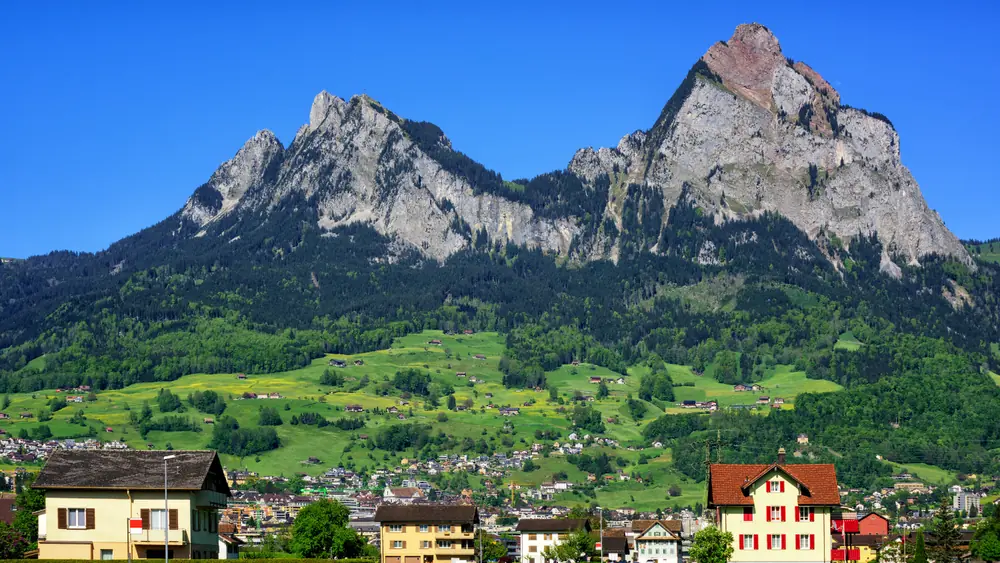
Twenty minutes from the excursion boats on Lake Lucerne lies a valley in which much looks as though time had passed more slowly. The Muotatal is deep and narrow and runs at its end into the karst walls of the Glarus Alps. Here Central Switzerland has kept a good deal of its wildness. Beneath the meadows lies the longest cave in the country; on the heights grows one of the last spruce primeval forests in Europe. In the village live farmers who forecast the weather with astonishing accuracy. The dialect spoken here defeats even other Swiss. Anyone looking for the old, unvarnished Switzerland will find it here.
The weather prophets
What is known beyond the valley are above all its weather forecasts. The Wetterschmöcker are an institution in the village. They are farmers and forest workers who twice a year deliver their long-range forecasts to a full hall and to the cameras of national television. They base them on ant heaps, fir cones, the behaviour of foxes and decades of watching the mountains. The appearances are half custom, half cabaret, but behind the quips lies a thorough knowledge of the region. The public forecast gatherings in spring and autumn are open to visitors as well. You do not have to understand every word of the dialect to have an entertaining evening there.
The underworld: Hölloch and karst
Below the valley floor stretches the Hölloch, with more than 210 km of explored passages the longest cave in Switzerland. It is open all year on guided tours, from the easy round to the multi-day expedition. Everything worth knowing about a visit is in the article Hölloch: inside one of Europe's largest cave systems.
Above ground the same water shaped the limestone of the Silberen between the Muotatal and the Pragel pass. What has emerged is a landscape of furrowed white rock that recalls the surface of the moon. The Silberen is one of the largest karst areas in the Alps and can be walked on marked routes. Stay on the markings, because it is easy to hurt an ankle in the deep runnels of the karren.
The Bödmeren primeval forest
On the karst plateau grows the Bödmerenwald, one of the largest spruce primeval forests in the Alps. Its trees have never seen an axe. Some are centuries old and have grown into shapes that do not occur in a managed forest. Paths from the Pragel pass road lead through the reserve. Anyone walking here on a foggy morning gets a sense of what the forests of the Alps once looked like.
The story of Suvorov
In the autumn of 1799 the Russian general Suvorov led 20 000 exhausted soldiers over the snow-covered Chinzig pass into the Muotatal. In the valley his army fought the French, then escaped over the Pragel. The march is still a well-known chapter of military history. The ViaSuworow traces the route. Our stage over the Chinzig Chulm down to Muotathal is a long and demanding day tour for hikers with stamina. All the details of the stage: From Biel-Kinzig through the Chinzertal to Muotathal. The convent in Muotathal, where Suvorov held his council of war, still stands today.
Out and about in the valley
- Husky treks: the team at the husky lodge in the valley offers outings with sledge dogs in winter and walks with the dogs in summer. Families are very fond of it.
- Hiking for every level: the paths range from riverside trails along the glass-green Muota to demanding summits. For the practised, the tour up the local mountain of the Muotatal and the long route from Saliboden are especially rewarding. The tour pages: From Schwarzenbach over the Wasserbergfirst to Muotathal and From Saliboden over the Pfaffenkreuz to the Pragelpass.
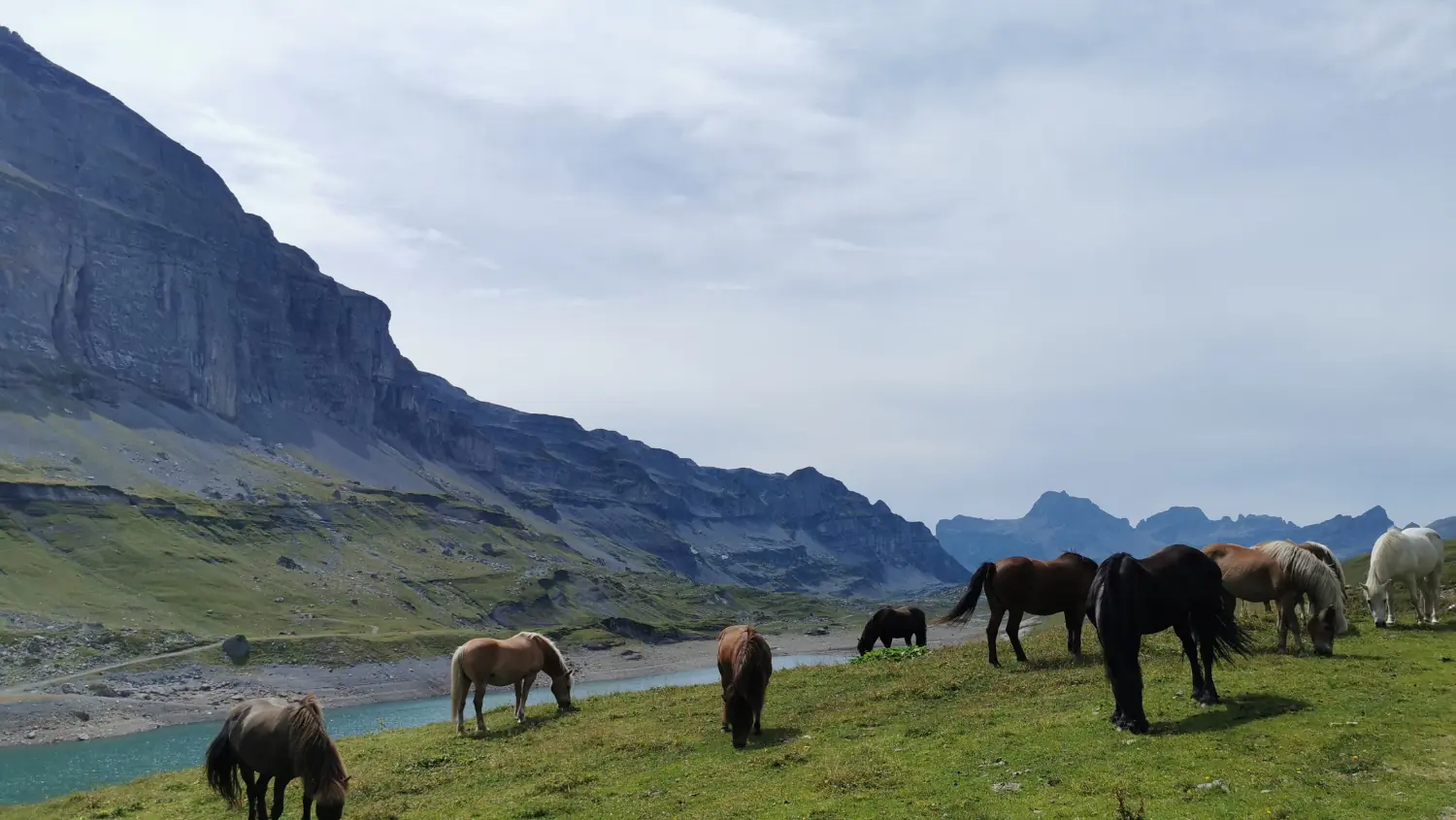
- Glattalp: in the Bisistal, a side valley of the Muotatal, a cable car takes you up to the high plateau where Switzerland's cold records are measured. In summer it invites a walk around the lake. More on this: Glattalp: the coldest place in Switzerland and how to visit it.
- Winter: the valley offers quiet terrain for ski tours and snowshoe walks. Add the expedition season in the Hölloch and there is plenty to do in the cold season too.
Where the character comes from
For centuries the Muotatal was hard country. People farmed steep meadows, brought wood down from the slopes and wrested a living from karst that swallows every drop of rain. Out of that grew a strong independence and a robust popular culture. Part of it is the Muotatal natural yodel, one of Switzerland's living traditions. Just as typical is that dry humour the weather prophets have made famous. There is tourism, but it follows the valley's own pace. You will find family inns, alpine cheese straight from the farm and locals who gladly take time for a chat if you start the conversation yourself.
Practical points
- Getting there: bus 501 runs from Schwyz through the whole valley. It is the same line that serves the Stoos funicular and the Hölloch. From Schwyz station to Muotathal village the ride takes about 25–35 minutes.
- Day trip or a longer stay? Most guests come for a day, from Schwyz, Brunnen or the Stoos. Anyone wanting to stay longer will find simple guesthouses and the husky lodge.
- When to come: May to October is the best time for hiking and for a visit to the forest. From November to March, cave expeditions, snowshoe tours and the huskies are the draw. A visit is therefore worthwhile in any season.
Frequently asked questions
What is the Muotatal known for? The valley is known for the Hölloch, the weather prophets, the Bödmeren primeval forest, the natural yodel and Suvorov's crossing of the Alps in 1799.
Is an excursion to the Muotatal worthwhile? Anyone looking for an original, unpolished Switzerland will get their money's worth here. In the Muotatal, natural records meet a living popular culture. And the valley lies only twenty minutes from Lake Lucerne.
How do I reach the Muotatal without a car? Take bus 501 from Schwyz station. It stops at the Stoos funicular, at the Hölloch and in the village of Muotathal.
Can you experience the weather prophets? Yes, their forecast gatherings in spring and autumn are public. You can find out the exact dates locally. Something of their manner, though, you will pick up in the village inns all year round.