Goldau nature and wildlife park: tips for your visit
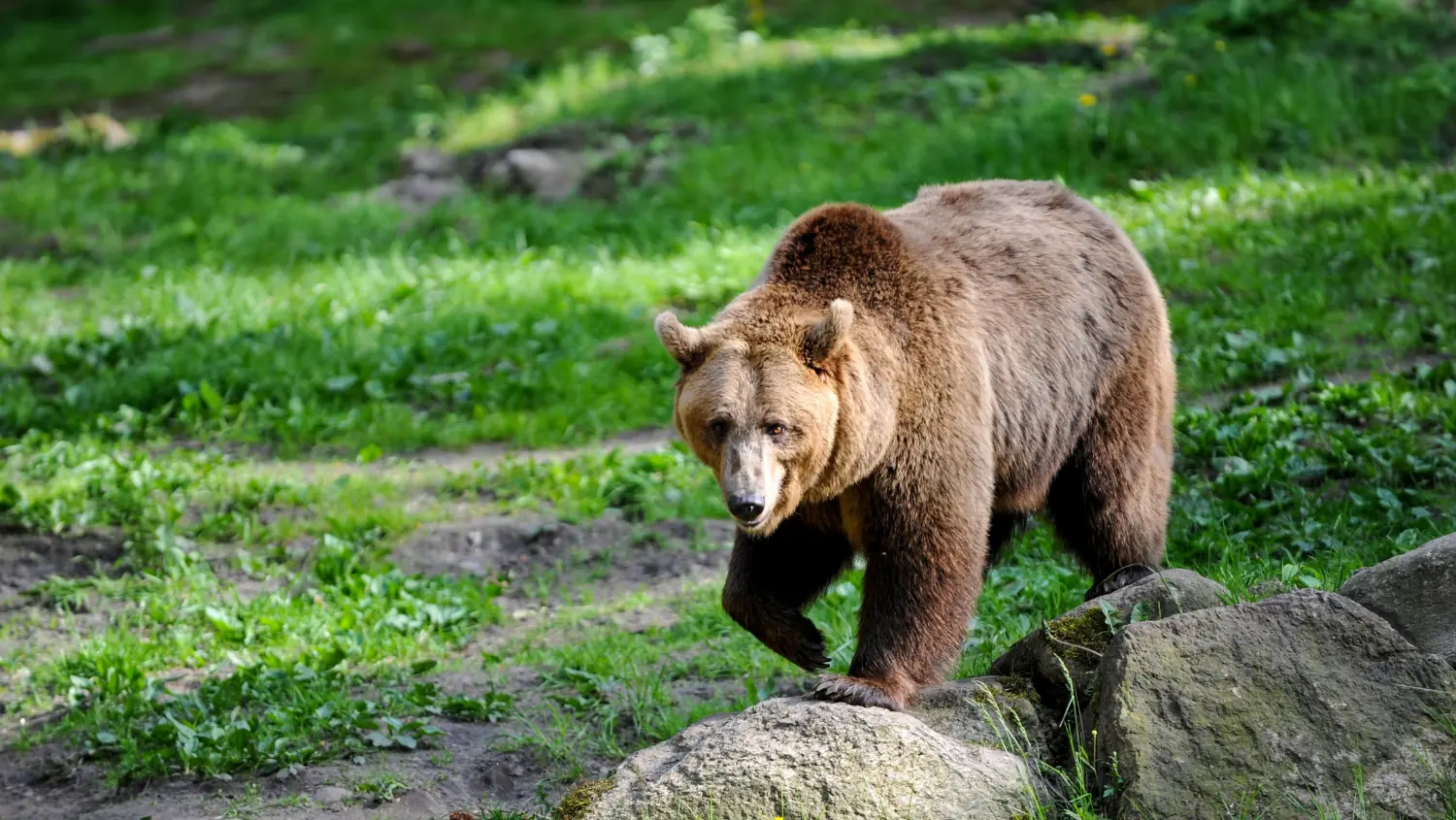
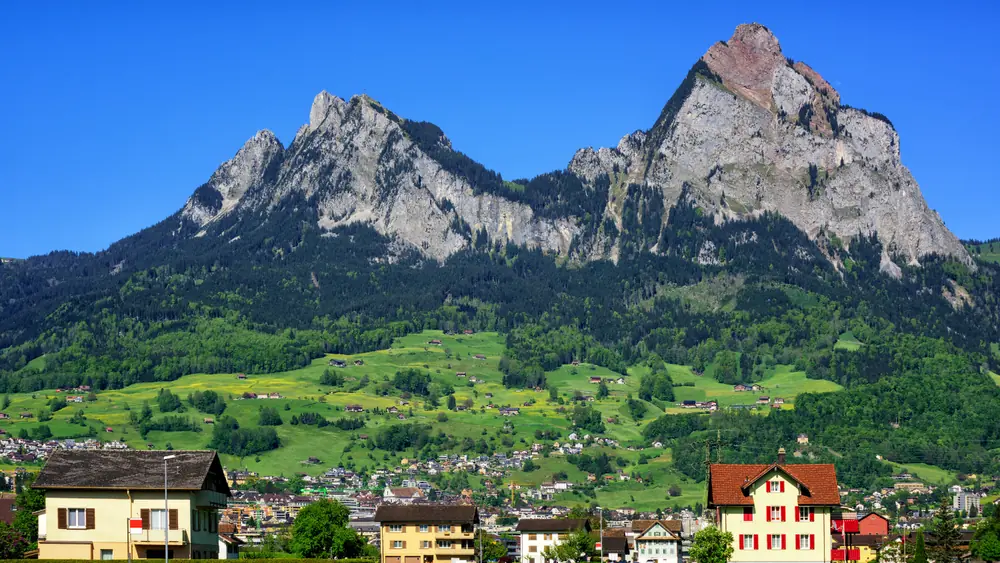
Between the Rigi and the Rossberg lies a wildlife park quite unlike others in Switzerland, because the landscape itself forms the enclosure. The Goldau nature and wildlife park spreads over 42 hectares of the debris field left by the Goldau rockslide of 1806. Back then a flank of the Rossberg broke away and buried the village beneath it. In the two centuries since, a mossy forest has grown over the rocks. Within it the park shows more than 100 species of native and European wildlife: bears and wolves live in one large shared enclosure, ibex climb on the boulders, lynxes keep to the shade and tame deer feed from your hand. Because the park lies only a few minutes' walk from a station on the main line, it suits a half day with the family very well.
Bears and wolves in a shared enclosure
Goldau is best known for the large shared enclosure in which brown bears and a wolf pack inhabit the same extensive stretch of forest. It is among the first enclosures in Europe in which these two species live together. Among rocks, ponds and deadwood you can watch how carefully the animals approach one another, much as they would in the wild. The best observations come at feeding and keeper times, published daily at the entrance and online. Bring a little patience. The animals do not appear on demand, but in return you see their natural behaviour.
Which other animals you will see
The park deliberately limits itself to the animals of the Alps and Europe; there are no lions or giraffes here.
- Ibex and chamois, moving surefootedly over the boulders of the rockslide
- Lynx, wildcats and otters, shy native animals that hardly anyone gets to see in the wild
- Bearded vultures and owls; the park takes part in the reintroduction of the bearded vulture to the Alps
- Free-roaming sika deer and mouflon, which wander among the visitors in large parts of the park. The approved feed is sold at the entrance. For small children, coming so close to the animals is a special experience.
- Wild boar, marmots, storks and a farmyard corner for the youngest
The story of the rockslide
On your round it is worth keeping the history of the place in mind. On 2 September 1806 some 40 million cubic metres of rock broke away from the Rossberg and buried Goldau and neighbouring hamlets within minutes. The rockslide counts as one of the deadliest natural disasters in the Alps. Information points in the park explain the geology of the ground you are walking on. The mossy boulders that give the park its particular atmosphere all come from that event and have slowly been overgrown in two centuries. So as you stroll you gain, almost in passing, a sense of the forces at work in the mountains.
Practical points
- Getting there: the park lies a few minutes' walk from Arth-Goldau station. The Rigi railway also leaves from there, and there are connections to Lucerne (about 25 min), Zurich (about 45 min) and Schwyz (about 10 min). You do not need a car for the visit.
- Opening hours: the park is open daily and all year, but the opening and closing times change with the season. The current times are on the official website. A visit in winter is worthwhile too: the paths are quieter then and the wolves are often active.
- Time needed: 2–4 hours. The main round is easily done with a pushchair; for older children there are more natural paths.
- Food: there is a park restaurant as well as fireplaces and picnic areas. Popular with local families is the sausage they grill over the fire among the rockslide boulders.
- Combine with: the Rigi, whose rack railway leaves right at the station. Many families ride up the mountain in the morning and visit the animals in the afternoon. More on this: Rigi: The Guide to the Queen of the Mountains and Getting to the Rigi. The Hohle Gasse is only one stop further; more on it in the article The Hohle Gasse.
Frequently asked questions
Which animals live in the Goldau wildlife park? More than 100 native and European species live in the park. Best known are the brown bears and wolves in the shared enclosure, along with ibex, lynx, bearded vultures and free-roaming deer that you are allowed to feed.
How long does a visit take? Half a day is plenty. Anyone who likes to watch animals at length can easily spend a whole day in the park.
Is the Goldau wildlife park suitable for small children? Yes, very much so. Feeding the deer, the farmyard corner and the playgrounds are aimed precisely at small children.
Is the park open in winter? Yes, the park is open daily and all year. In winter the paths are quieter and the predators often more active.
How do I get there by public transport? Take the train to Arth-Goldau. From Lucerne the journey takes about 25 minutes, from Zurich about 45 and from Schwyz about 10. From the station it is a short, signposted walk.